Primary Causes of Sub-Slab Pipe Failures
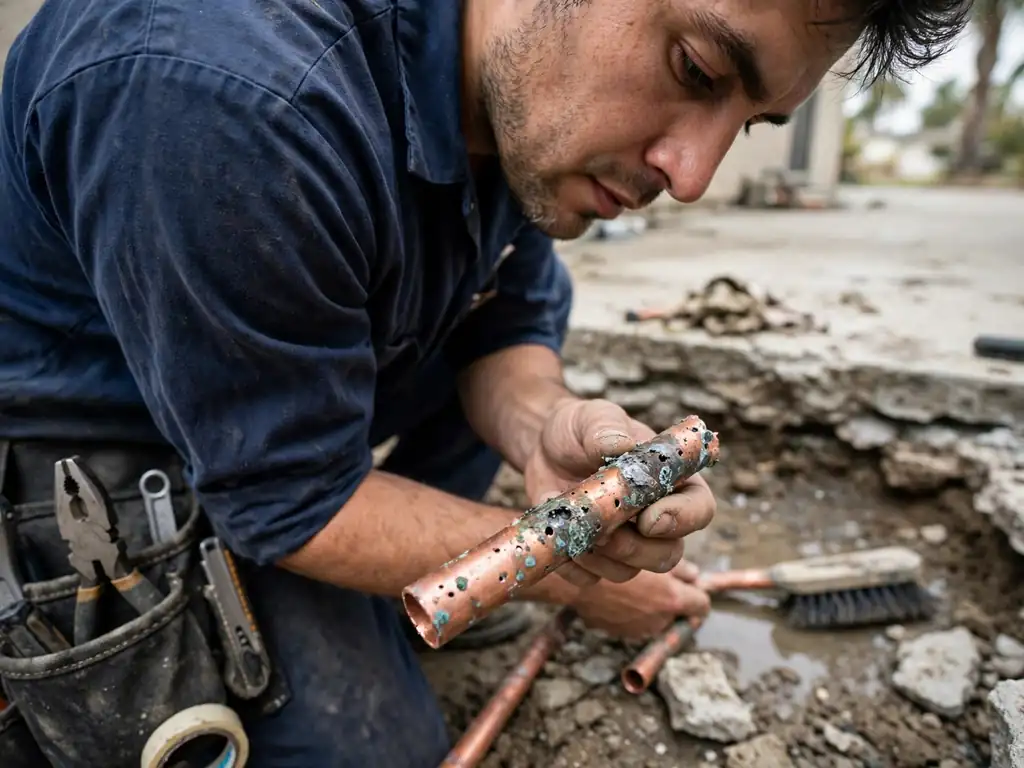
Sub-slab leaks develop when copper lines contact jagged concrete aggregate or coarse sand without protective sleeving. Decades of thermal expansion cycles create external friction wear, while aggressive hard water strips internal copper oxide linings, creating microscopic pinholes.
Pressurized hot water lines experience higher failure rates due to aggressive thermal cycling. Every hot-water cycle expands the metal, accelerating friction against concrete aggregate until the pipe wall breaches.
Sectional Spot Repair vs. Overhead PEX-a Repiping
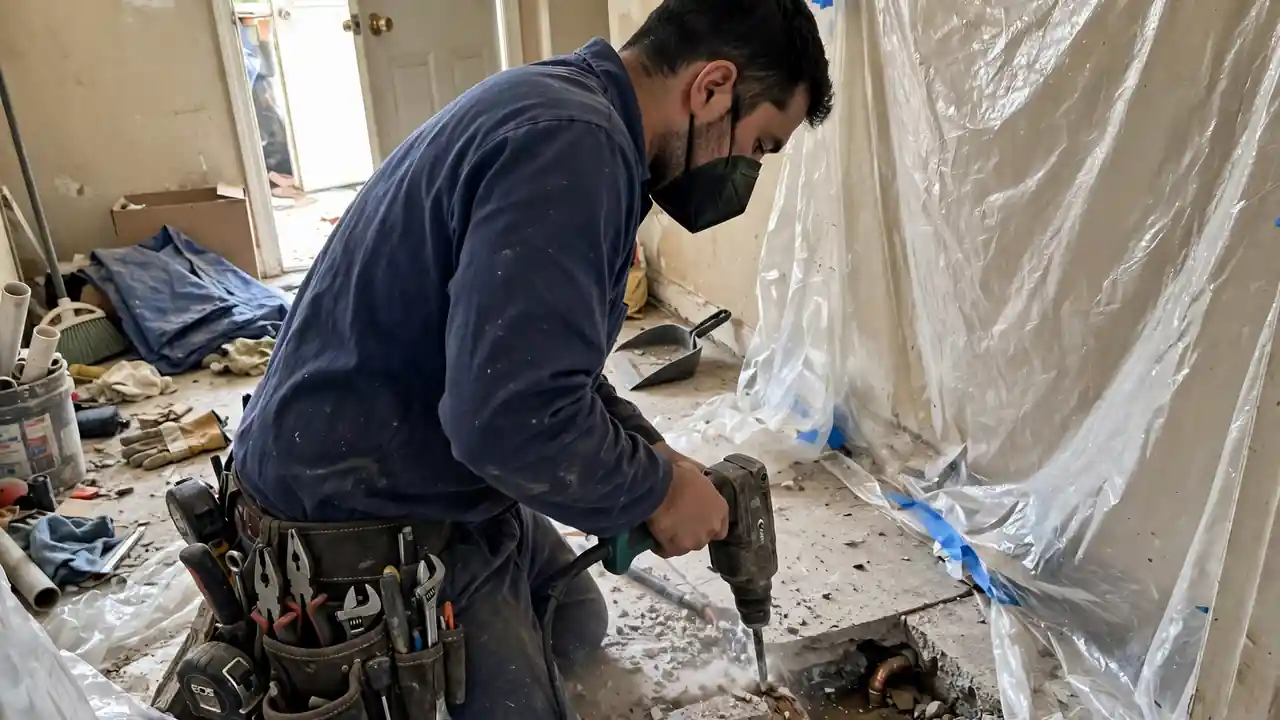
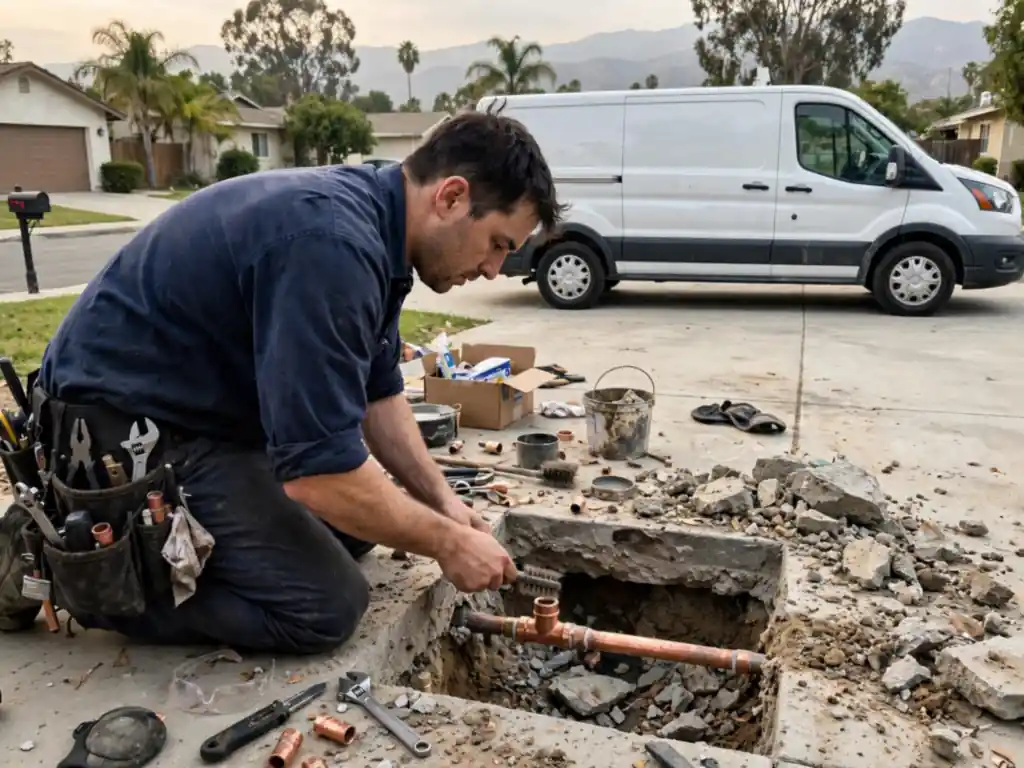
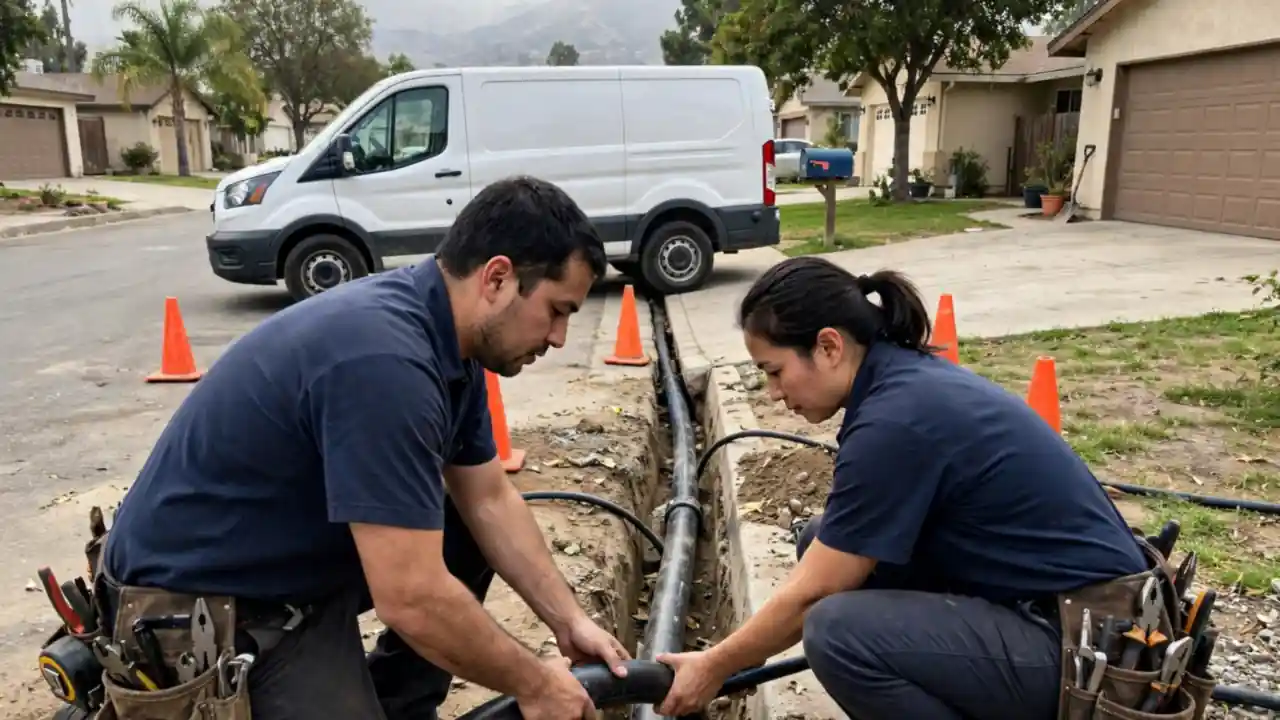
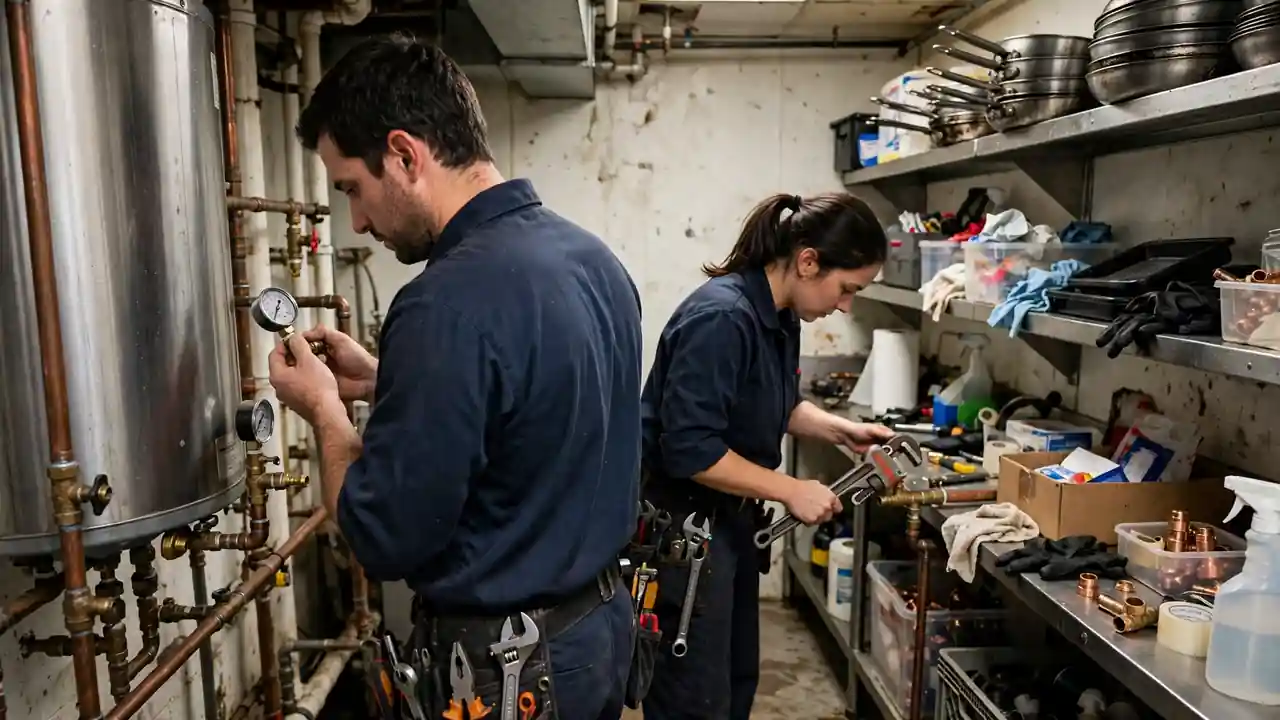
A spot repair requires opening concrete directly at the breach to install a Type L copper sleeve with Viega ProPress fittings. For newer plumbing systems with isolated physical damage, spot repairs offer rapid, targeted resolution.
For older corroded copper systems, an overhead repipe bypasses failed underground pipes by routing durable Uponor PEX-a piping through walls and attic rafters. This permanent solution prevents future slab leaks and completely avoids concrete floor demolition.
Consequences of Deferred Slab Leak Remediation
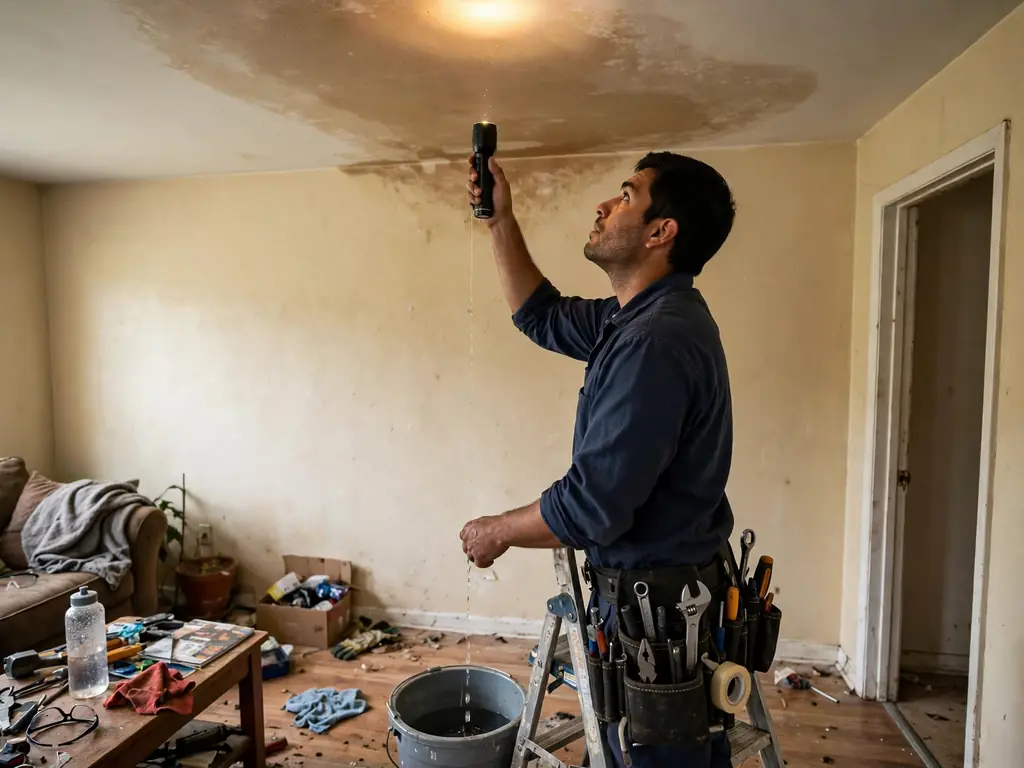
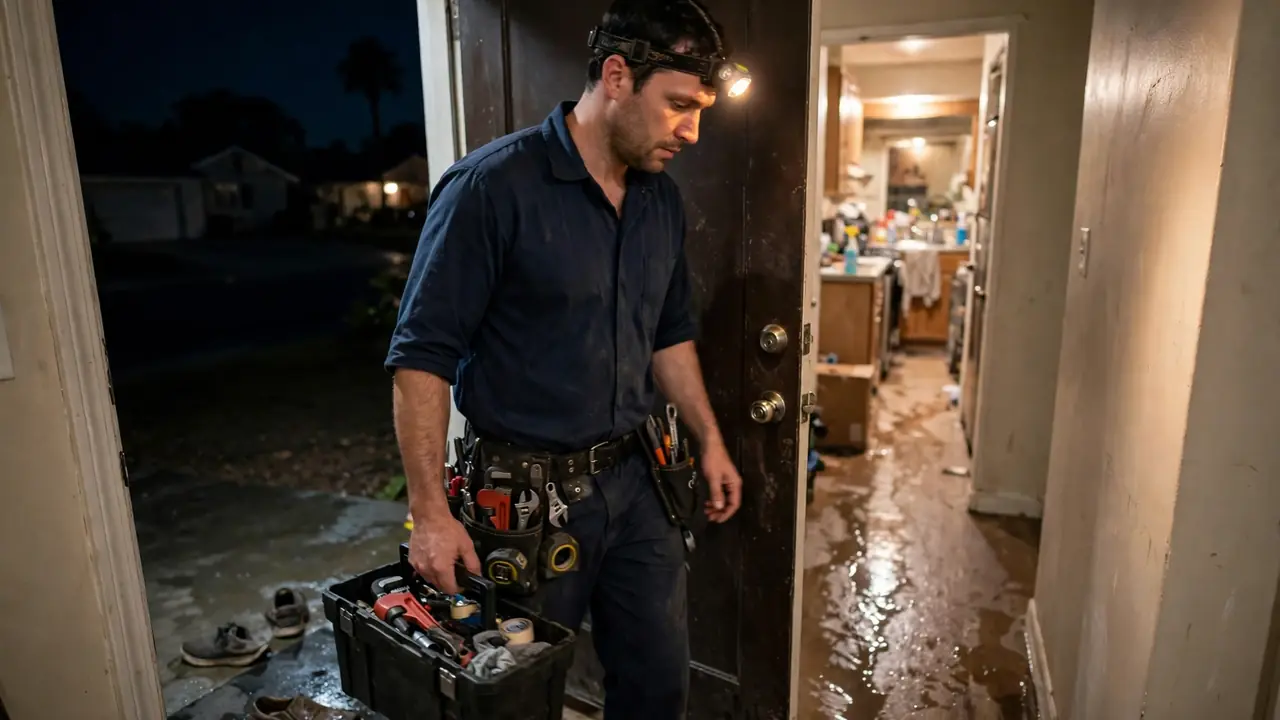
Pressurized water discharging beneath a foundation slab erodes supporting soil, creating voids that cause concrete slabs to crack, buckle, and settle unevenly. Saturated subflooring encourages hazardous mold growth within 48 hours.
A continuous pinhole leak running at 60 psi wastes thousands of gallons of water per month, drastically inflating utility bills. Rapid professional intervention halts water waste and safeguards property value.